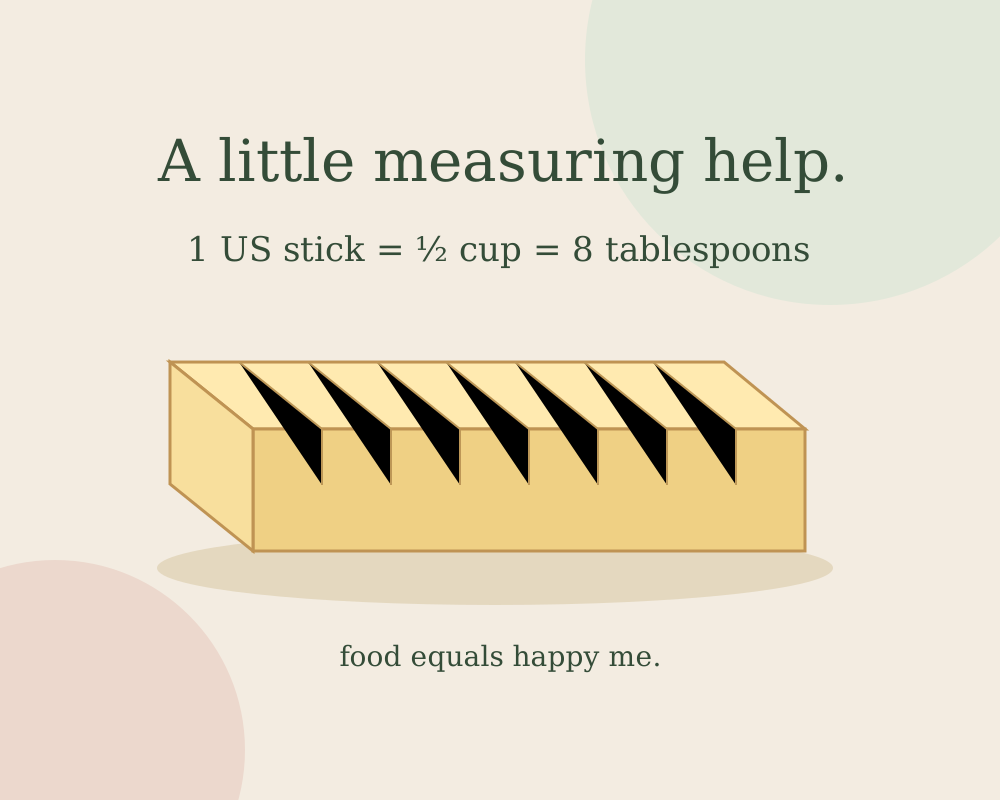
One full US stick of butter equals 1/2 cup, 8 tablespoons, 4 ounces by weight, or about 113 grams. Two full sticks make one cup.
Check the wrapper: a US half-stick contains 1/4 cup, and a block marked 250 g isn't two US sticks. Land O'Lakes lists both full-stick and half-stick equivalents.
Butter conversion calculator
Decimals and fractions work: try 0.5, 1/2, or 1 1/2.
- US sticks
- 1
- US cups
- 0.5
- US tablespoons
- 8
- Grams
- 113.4
- Ounces (weight)
- 4
Ounces here mean weight, not fluid ounces. Results are rounded; use a scale when your recipe gives grams.
Butter conversion chart
| Sticks | Cups | Tablespoons | Grams |
|---|---|---|---|
| 1/4 | 1/8 | 2 | 28 |
| 1/2 | 1/4 | 4 | 57 |
| 1 | 1/2 | 8 | 113 |
| 1 1/2 | 3/4 | 12 | 170 |
| 2 | 1 | 16 | 227 |
Converting a recipe written in grams
For flour, sugar, and other ingredients, use the ingredient grams-to-cups converter and recipe scaler. Each food needs its own cup weight.
Our banana brownies use 180 g butter: that's about 1.587 sticks, 0.794 cup, or 12.699 tablespoons. Those awkward fractions are a good reason to use a kitchen scale when a recipe gives a weight.
The peanut butter brownies use 250 g. That's about 2.205 full US sticks, not exactly two. Put the bowl on your scale, zero it, and add butter until it reads 250 g.
For the calculation, a full stick is a quarter of a pound. Using NIST's conversion of one pound to 453.59237 grams gives 113.3980925 g per stick. The calculator keeps that precision internally and rounds the displayed result.
A few measuring details
- Wrapper tablespoon marks are useful for cutting a firm stick. Eight of those tablespoons make a full stick.
- “Ounces” on a butter wrapper means weight. For fluid ounces in a liquid recipe, use our kitchen conversion charts.
- Use ordinary butter for these equivalents. Whipped butter and spreadable blends aren't interchangeable by volume.
- Keep the recipe's instruction to soften, melt, or chill the butter. Matching the quantity doesn't make those methods interchangeable.
If your next unfamiliar ingredient is caster sugar, the caster sugar substitute guide explains its US names and alternatives.
A question about this post?
Tell us what you’re making and where you got stuck. Recipe corrections are welcome, too.
Send a note to the kitchen